
Prairie
Named for the Canadian Prairies, where a lawn can run right to the horizon.
Free US shipping, 90-day returns, 3-year warranty
Our story
Where the name comes from
In August 1914, just weeks into the First World War, a troop train carrying Canadian soldiers east from Winnipeg pulled into the small railway town of White River, Ontario.
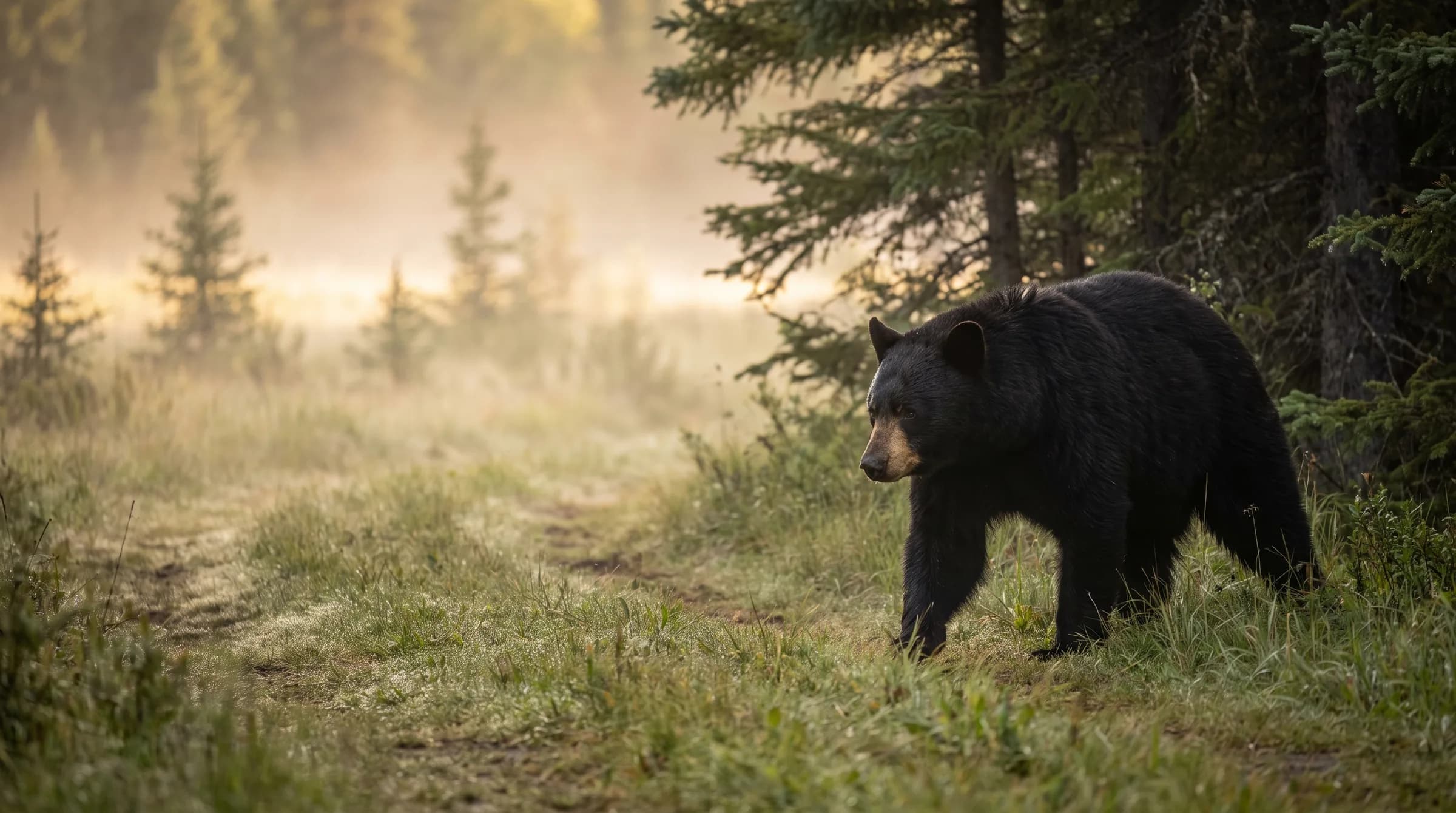
Aboard was Lieutenant Harry Colebourn, a veterinarian from Winnipeg traveling with the Canadian army. On the station platform he met a hunter with an orphaned black bear cub, and he bought her on the spot for $20. He named her Winnipeg, after his adopted hometown, and before long everyone was calling her Winnie.
She rode with the troops to their training camp and then crossed the Atlantic to England, where she became a regimental mascot, trailing the soldiers around camp and winning over just about everyone she met.
By December, with his unit getting ready to move to the front in France, it was clear that a battlefield was no place for a bear. Colebourn arranged for Winnie to stay at the London Zoo, planning to bring her home to Canada after the war. She settled in so well, and became such a favorite with visitors, that in 1919 he decided she should stay.
Winnie was famously gentle. Her keepers even let children into her enclosure to feed her and play. One of her regular young visitors was the son of the writer A. A. Milne, and he loved her so much that he named his own teddy bear after her. Winnie went on to inspire A. A. Milne's famous stories, and the tale of a cub bought on a northern Ontario train platform has been told around the world ever since.
1914 to today
August 1914
On a troop train headed east, Lt. Harry Colebourn buys an orphaned black bear cub on the station platform for $20 and names her Winnipeg.
Fall 1914
Winnie sails to England with the Canadian troops and becomes a regimental mascot at their training camp.
December 1914
With his unit soon bound for the front in France, Colebourn leaves Winnie in the care of the London Zoo.
1919
After the war, seeing how much she is loved there, Colebourn makes her stay at the zoo permanent.
The 1920s
Winnie wins over a young visitor, the son of A. A. Milne, and goes on to inspire his father's famous stories.

That's the balance we look for in everything we sell: equipment built for hard work that's still easy to live with, season after season.
Winnie's Depot
Winnie's story is about showing up when it counts: tough when the going got rough and good-natured the rest of the time. That's exactly what we want from outdoor power equipment, and it's why her name is on our sign. The “Depot” part is a nod to the classic big-box hardware depots, the kind of place where you could find what you needed at a fair price and get a straight answer.
Today we sell mowers, generators, pressure washers, trimmers and sheds to yards, driveways and cabins across the United States. We keep the lineup focused, price it honestly and stand behind it, so picking the right machine is the easy part of your weekend.
Straightforward prices in US dollars, with shipping included. No inflated “was” prices and no countdown-clock sales.
Every order ships free within the United States, with free curbside freight delivery for our biggest items.
Not the right fit for your yard? You have 90 days to send it back.
Every product we sell is backed by our 3-year limited warranty.
The names
Every product line borrows its name from a piece of the Canadian landscape, a small salute to the country Winnie came from.
Named for the Canadian Prairies, where a lawn can run right to the horizon.
Named for the Red River, which winds through Winnipeg, the city Winnie was named after.
Named for The Forks in Winnipeg, where the Red and Assiniboine rivers meet.
Named for the aurora borealis, the northern lights that brighten long winter nights.
Named for Niagara Falls, the thundering falls on the border between Ontario and New York.
Named for Ontario's Muskoka lake country, where every dock deserves a tidy path.
Named for the classic northwoods lodge: a sturdy shelter at the edge of the trees.